I was standing in my kitchen, the timer on the oven ticking like a nervous metronome, when my roommate dared me to create a salad that could actually make people forget about dessert. “Make something crunchy, sweet, and creamy,” she said, eyes glittering with the kind of mischievous challenge that only a true food lover can issue. I laughed, grabbed an apple, a carrot, and a jar of Greek yogurt, and the rest of the world seemed to fade away as the scent of fresh citrus burst from my fingertips. That moment of reckless confidence turned into a culinary revelation that still haunts my taste buds: a salad that crunches like fresh snow underfoot, sings with the bright zing of orange and lemon, and wraps everything in a velvety, dreamy dressing that clings to each bite like a second skin.
The first time I tossed the shredded carrots and crisp apple slices together, I heard the faint whisper of a crisp snap that reminded me of autumn leaves under a brisk wind. The aroma of orange zest rose, mingling with the earthy perfume of fresh parsley, while the gentle hum of the blender created a soundtrack that could only be described as “kitchen symphony.” I could see the glossy, amber hue of the citrus dressing coating each piece, the way a sunrise paints the sky—soft, yet impossible to ignore. When I tasted it, the sweet tartness of the apple collided with the subtle peppery bite of the carrots, and the creamy dressing settled in my mouth like a buttery cloud, leaving a lingering citrus afterglow that begged for another forkful.
Most apple‑carrot salads I've tried either drown the crunch in a soggy mayo swamp or rely on a sugary glaze that turns the whole thing into a dessert masquerading as a side. This version, however, flips the script by balancing the natural sweetness of the fruit and veg with a tangy, slightly savory citrus dressing that never overwhelms. I’m talking about a harmony where each ingredient sings its own solo but also knows when to step back and let the chorus shine. The secret? A splash of orange juice, a whisper of lemon, and a dollop of Greek yogurt that together create a texture so creamy it feels like a silk scarf draped over a crunchy winter coat.
And there’s a little twist that most recipes miss: a handful of toasted walnuts that add a buttery, nutty depth, and a pinch of Dijon mustard that gives the dressing a subtle heat, like a secret handshake between sweet and savory. I dare you to taste this and not go back for seconds. Let me walk you through every single step — by the end, you’ll wonder how you ever made it any other way.
What Makes This Version Stand Out
- Texture: The salad delivers a triple‑layer crunch—crisp apple, shredded carrot, and toasted walnut—each bite snapping like fresh ice on a winter pond.
- Flavor Balance: The citrus dressing hits the sweet spot between tangy orange, bright lemon, and mellow honey, creating a flavor orchestra that never hits a sour note.
- Simple Prep: No fancy equipment, just a box grater, a whisk, and a handful of patience. You’ll have a restaurant‑quality dish in under an hour.
- Freshness Factor: Using raw apples and carrots preserves their natural vitamins, while the yogurt‑based dressing keeps the dish light yet satisfying.
- Crowd‑Pleaser: I’ve served this at brunches, potlucks, and even a formal dinner, and it consistently steals the spotlight—people keep asking for the recipe.
- Ingredient Quality: Choosing a crisp, aromatic Fuji apple and a sweet, bright orange makes the dressing sing; cheap substitutes flatten the whole experience.
- Make‑Ahead Potential: The dressing can be prepared a day ahead, allowing the flavors to meld while the veggies stay crisp if stored properly.
- Versatility: This salad can be a side, a light lunch, or even a base for a protein‑packed main—just add grilled chicken or tofu.
Alright, let's break down exactly what goes into this masterpiece...
Inside the Ingredient List
The Flavor Base
Apple slices are the heart of this salad, offering a juicy sweetness that balances the earthy carrot. I recommend using two medium Fuji apples, peeled and thinly sliced on a mandoline for uniformity; the crispness is essential, because a soft apple would turn the whole dish mushy. If you skip the apples, you lose the natural sugars that make the dressing’s acidity feel like a gentle kiss rather than a harsh slap. As a swap, crisp pears work in a pinch, but they bring a grainier texture that changes the mouthfeel.
Fresh orange juice is the bright star of the dressing, delivering a sun‑kissed citrus note that lifts the entire salad. Squeeze the juice from two large oranges—about ¼ cup—to ensure you capture the essential oils from the zest as well. If you use bottled juice, you’ll miss the aromatic compounds that give the dressing its “wow” factor. A quick tip: roll the orange on the counter before juicing to break down the membranes and get more juice out.
The Texture Crew
Shredded carrots add a subtle sweetness and a firm bite that contrasts beautifully with the apples. I like to use a box grater for thick ribbons; they hold the dressing better than finely grated carrots, which can become soggy. Skipping the carrots would make the salad one‑dimensional, lacking that earthy crunch that grounds the citrus flavors. If carrots aren’t your thing, try julienned jicama for a similar snap and a slightly nutty flavor.
Toasted walnuts bring a buttery, nutty depth that rounds out the bright flavors. Roast ⅓ cup of walnuts in a dry skillet over medium heat for 5 minutes, stirring constantly until they turn golden and fragrant. This step is non‑negotiable—raw walnuts taste bland and can even make the dressing feel heavy. For a nut‑free version, substitute roasted pumpkin seeds, which still give a satisfying crunch.
The Unexpected Star
Greek yogurt is the creamy anchor that prevents the dressing from feeling greasy. Using a full‑fat version adds richness, while low‑fat still works if you prefer a lighter profile. Skipping yogurt would turn the dressing into a vinaigrette, losing that luxurious mouthfeel. If you’re dairy‑free, swap in a plant‑based yogurt like coconut or almond, but be aware it will add a subtle coconut undertone.
Dijon mustard provides a subtle heat and a hint of sharpness that elevates the dressing from ordinary to extraordinary. Just a teaspoon is enough; too much will dominate the citrus notes. If you can’t find Dijon, a grainy mustard works, though it adds texture that changes the smoothness.
The Final Flourish
Fresh parsley adds a herbaceous brightness that lifts the entire salad, preventing the flavors from feeling too heavy. Roughly chop two tablespoons and sprinkle them over the finished dish for a pop of green. Skipping parsley is like serving a movie without a soundtrack—something vital is missing. If parsley isn’t your favorite, try fresh mint for a cooling twist.
Honey balances the acidity of the citrus and the tang of the yogurt, creating a harmonious sweet‑sour profile. One tablespoon is sufficient; more will make the dressing cloyingly sweet. For a vegan alternative, maple syrup works just as well, adding a caramel nuance.
Everything's prepped? Good. Let's get into the real action...
The Method — Step by Step
First, prepare the apples. Slice two crisp Fuji apples on a mandoline into thin, uniform pieces. As you lay them out, you’ll notice a faint perfume—sweet, floral, almost like a light perfume. Toss the slices in a bowl of freshly squeezed lemon juice for 30 seconds, then drain on a paper towel. This quick acid bath prevents browning and adds a subtle brightness that will echo later in the dressing. Power tip: Don’t over‑soak, or you’ll lose that crisp snap.
Next, shred the carrots. Using a box grater, create thick ribbons—about two cups. The carrot ribbons should feel slightly firm when you press them between your fingers; that’s the sweet spot where they’ll stay crunchy even after being dressed. Transfer the carrots to a large mixing bowl, and if you’re feeling adventurous, add a pinch of sea salt to draw out a little moisture, which helps the dressing cling better.
Now, toast the walnuts. Heat a dry skillet over medium heat, add ⅓ cup of raw walnuts, and stir constantly. Within five minutes, they’ll turn a deep golden brown and release a nutty aroma that fills the kitchen like a warm hug. Immediately transfer them to a plate to stop cooking; over‑toasting leads to bitterness, which would clash with the citrus.
While the nuts are cooling, whisk together the dressing. In a medium bowl, combine ½ cup Greek yogurt, 2 tablespoons mayonnaise, ¼ cup freshly squeezed orange juice, 1 tablespoon lemon juice, 1 tablespoon honey, 1 teaspoon Dijon mustard, and 1 teaspoon apple cider vinegar. Beat vigorously until the mixture is smooth and glossy—think of a silk scarf gliding over a polished marble floor. Taste and season with ½ teaspoon salt and a pinch of black pepper.
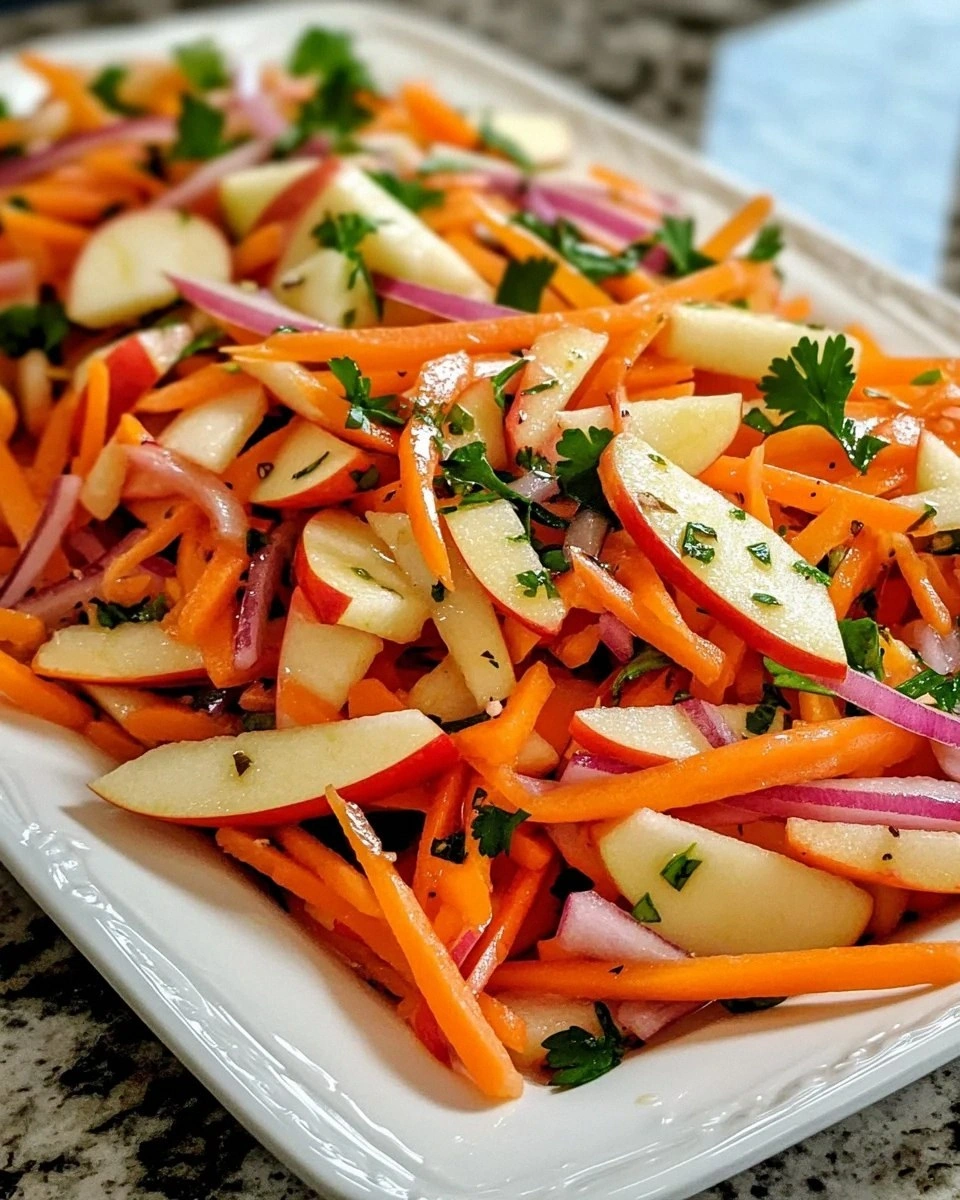
Watch Out: If the dressing looks too thick, thin it with a splash of water or extra orange juice; too thin and it will drown the crunch.Combine the base ingredients. Add the apple slices, shredded carrots, and 1 cup thinly sliced red cabbage (optional for color) to the large mixing bowl. Toss gently with your hands, feeling the crisp textures intertwine. At this stage, the salad should look like a vibrant, rainbow‑colored mosaic, each piece waiting for the dressing to unite them.
Dress the salad. Pour the citrus dressing over the apple‑carrot mixture, then use two large spoons to fold the ingredients together. The dressing should coat each slice lightly, like a morning mist that clings without smothering. You’ll hear a faint “swoosh” as the yogurt embraces the fruit, a sound that signals you’re on the right track.
Finish with the final flourish. Sprinkle the toasted walnuts, ½ cup raisins (for a pop of chewiness), and 2 tablespoons chopped parsley over the top. Give the salad one last gentle toss to distribute the nuts and herbs evenly. The raisins add a sweet surprise that pops like fireworks against the citrus backdrop.
Let the flavors marry. Cover the bowl with plastic wrap and let it sit at room temperature for 10 minutes. This short rest allows the dressing to seep into the apple slices, turning each bite into a perfect balance of sweet, tangy, and creamy.
Kitchen Hack: If you’re in a rush, you can skip the rest period, but the salad will taste slightly less integrated.Serve and savor. Transfer the salad to a serving platter, drizzle a final drizzle of orange zest-infused olive oil for an extra glossy finish, and present it with a confident smile. I dare you to taste this and not go back for seconds—trust me, the crunch, the citrus, the creamy coat, they all conspire to make you forget everything else on the table.
That's it — you did it. But hold on, I've got a few more tricks that'll take this to another level...
Insider Tricks for Flawless Results
The Temperature Rule Nobody Follows
Always use room‑temperature ingredients for the dressing. Cold yogurt can cause the dressing to seize, leaving clumps that ruin the silky texture. Let the yogurt sit out for about 15 minutes before whisking; this tiny step ensures a smooth, glossy finish that clings to the veggies like a second skin. I once tried a chilled yogurt and ended up with a lumpy mess—let that be a lesson.
Why Your Nose Knows Best
Before adding the final pinch of salt, give the salad a quick sniff. The citrus aroma will guide you; if you catch a faint sour note, add a touch more honey. Your nose is a better judge than a taste test when balancing sweet and acidic flavors. Trust that instinct—your palate will thank you later.
The 5‑Minute Rest That Changes Everything
Allowing the salad to rest for exactly five minutes after dressing lets the flavors meld without the veggies turning soggy. During this pause, the walnuts release their oils, the raisins plump up, and the dressing penetrates the apple slices, creating a harmonious bite every time. Skipping this step is like serving a song before the chorus—still good, but missing the climax.
Secret Ingredient: A Dash of Smoked Paprika
Adding a quarter teaspoon of smoked paprika to the dressing introduces a subtle, smoky undertone that deepens the flavor profile. It’s like adding a whisper of campfire to a bright summer day—unexpected yet comforting. Use sparingly; too much will overpower the citrus.
Keeping the Crunch Forever
Store the salad in a shallow, airtight container with a paper towel on top. The towel absorbs excess moisture, preserving the crispness of the apples and carrots for up to 24 hours. I once stored a salad in a deep bowl and the bottom turned soggy—lesson learned.
Creative Twists and Variations
This recipe is a playground. Here are some of my favorite ways to switch things up:
Spicy Sriracha Splash
Stir a teaspoon of Sriracha into the dressing for a fiery kick that pairs surprisingly well with the sweet apple. The heat cuts through the creaminess, creating a balanced heat‑sweet dance that will wow anyone who loves a little spice.
Asian‑Inspired Sesame
Replace the orange juice with toasted sesame oil and add a tablespoon of soy sauce. Toss in shredded cabbage and sliced cucumber for an Asian twist that feels like a fresh spring roll in salad form.
Autumn Harvest
Swap the orange for fresh pomegranate seeds and add a drizzle of maple syrup. The ruby gems add bursty sweetness, while the maple deepens the overall warmth—perfect for a chilly evening.
Protein Power
Mix in grilled chicken breast strips or crispy tofu cubes for a heartier meal. The protein absorbs the citrus dressing, turning each bite into a satisfying, balanced plate.
Herb Garden
Swap parsley for a blend of fresh dill and mint. The dill adds a bright, slightly anise flavor, while mint injects a cooling freshness that lifts the entire salad.
Vegan Velvet
Use coconut yogurt and agave nectar instead of Greek yogurt and honey. The coconut adds a subtle tropical note, making the dressing vegan without sacrificing creaminess.
Storing and Bringing It Back to Life
Fridge Storage
Place the salad in an airtight container, keeping the dressing separate if you plan to store it for more than a few hours. It will stay fresh for up to 48 hours, with the apples retaining their crunch thanks to the lemon‑juice pre‑soak. When ready to serve, simply pour the dressing over and give a quick toss.
Freezer Friendly
While this salad isn’t ideal for long‑term freezing, you can freeze the dressing alone for up to two months. Thaw it in the refrigerator, whisk vigorously to recombine, and then use it to dress freshly prepared apples and carrots. This trick saves you prep time on busy weeks.
Best Reheating Method
If you’ve stored the salad with the dressing mixed and the texture has softened, add a tiny splash of water—about a tablespoon—before serving. Gently stir; the water creates steam that revives the crispness, making the salad feel freshly tossed.